For more details, visit:
https://helsinki.fi/tutkijoidenyo
Tutkijoiden yö 2026

OPEN POSITION
Helsinki Institute of Physics invites applications to the post of
DIRECTOR
to a fixed term position for 5 years starting 1.2.2027 or as agreed.
Application period closes 5 October 2026.
For more information on the post and how to apply, see:https://jobs.helsinki.fi/job/Helsinki-Director%2C-Helsinki-Institute-of-Physics-%28HIP%29/1371284057/
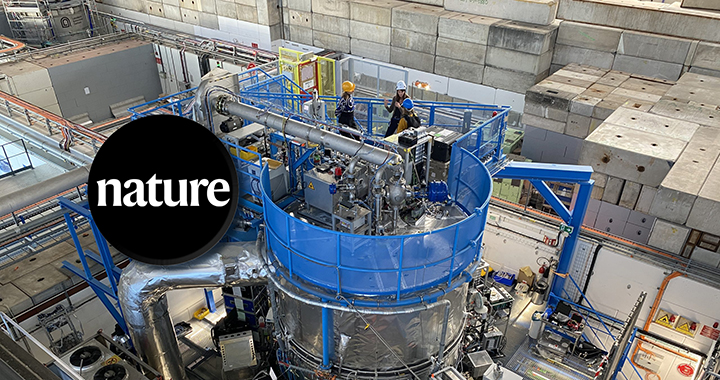
(photo: CERN)
Science publication by the CLOUD collaboration, including researchers from INAR and HIP.
https://www.nature.com/articles/s41586-026-10810-2
https://home.cern/cloud-experiment-uncovers-a-major-new-source-of-marine-aerosol-particles/
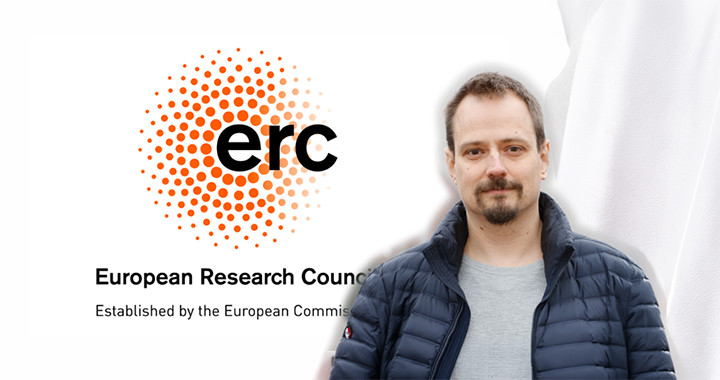
Original photo of Aleksi Vuorinen by Maarit Kytöharju
Hunting for quark matter in neutron star cores
Neutron stars are the densest objects in the present-day universe. In the extreme conditions of their cores, even the particles found in atomic nuclei, protons and neutrons, are believed to dissolve into quarks. As far as is known, such quark matter is not found anywhere else.
Professor Aleksi Vuorinen’s (Faculty of Science) project combines complex quantum-field-theoretical calculations with neutron star observations to either confirm or disprove the occurrence of this new state of matter in neutron star cores.
The project aims to advance understanding of the fundamental structure of matter and the laws of nature under extreme conditions.
See the full post and the other winners: https://www.helsinki.fi/en/news/university/major-eu-funding-five-university-helsinki-researchers
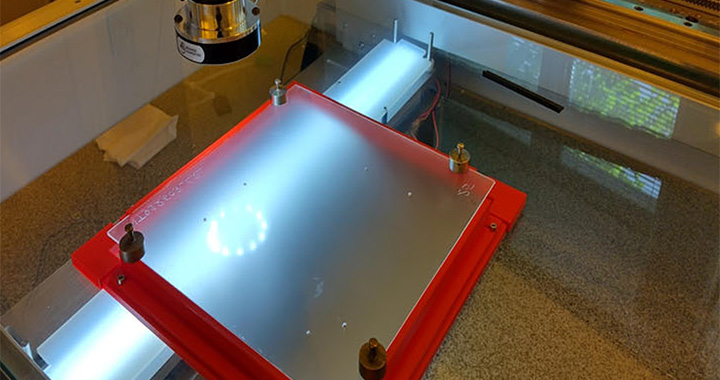
HIP researchers have developed a new method to improve the identification of latent tracks in nuclear track detectors:
“The MoEDAL experiment employs solid-state nuclear track detector foils around Interaction Point 8 to search for traces of highly ionizing particles. The selected material, CR-39, has been used in several experiments and is capable of detecting ionization tracks down to the level of oxygen ions. However, due to the high-radiation environment of the Large Hadron Collider, the material becomes opaque after chemical etching and exhibits strong scattering properties. This complicates the identification of low-ionization tracks. By deploying liquid thin films on both sides of the irradiated foils and using machine-vision techniques, etch pits in the foils can be detected and classified.”
More information: https://www.epj.org/epjst-news/3004-epjst-highlight-improved-technique-could-reveal-beyond-standard-model-particles-in-cern-detector
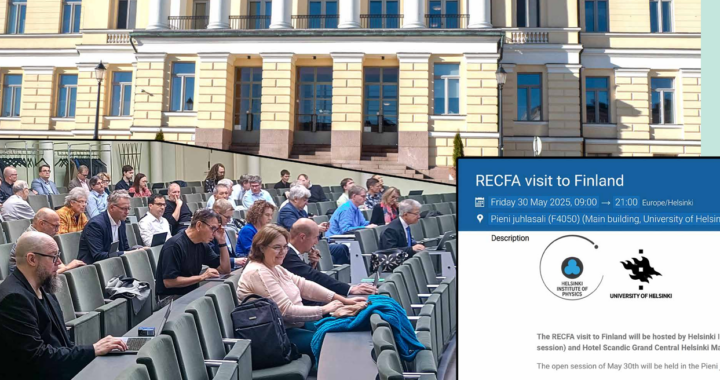
The Annual Report 2025 has been published.
Please see the online version Here.
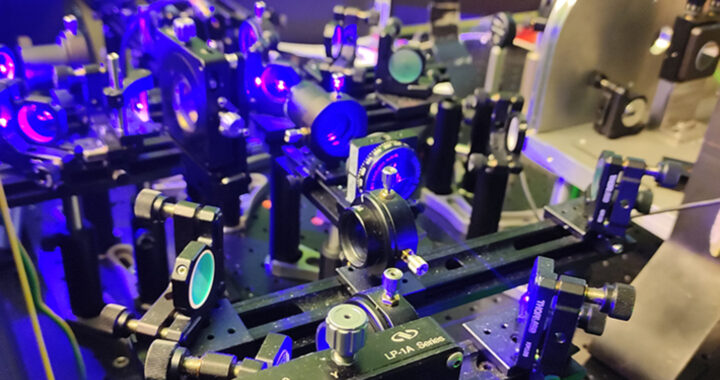
(photo: “Using high-resolution laser spectroscopy, the researchers were able to observe, for example, the Bohr–Weisskopf effect, where the molecule’s energy levels shift slightly due to the internal magnetic structure of the nucleus.”. Credit University of Jyväskylä)
Scientists at CERN’s ISOLDE facility have, for the first time, observed how magnetism is distributed within an atomic nucleus using high-resolution molecular measurements — a result that opens new avenues in nuclear and molecular physics. Our member university, the University of Jyväskylä, participated in this international research team, reflecting the impact of our ISOLDE project collaboration in advancing fundamental physics. The original post includes images and details of the technique and findings.
Read the full original post here:
https://www.jyu.fi/en/news/university-of-jyvaskyla-part-of-breakthrough-nuclear-magnetism-measured-in-a-new-way
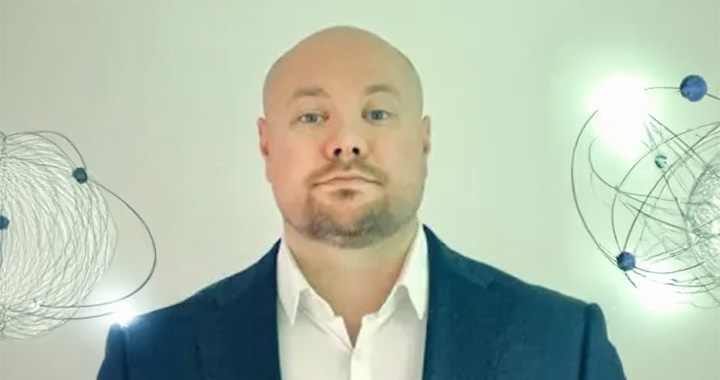
(photo: University of Helsinki with AI-enhanced background)
University of Helsinki researcher Risto Paatelainen, based at Kumpula Campus Physicum and contributing to our Phases of Strongly Interacting Matter Theory Programme, has received a prestigious €2 million ERC Consolidator Grant to advance theoretical understanding of matter under extreme densities, including quark matter in neutron stars. This significant funding underscores our collaboration in cutting-edge strong-interaction physics research within the HIP network.
Read the full original post here:
https://www.helsinki.fi/en/news/life-sciences/esteemed-eu-grants-worth-eu2-million-go-five-university-helsinki-researchers
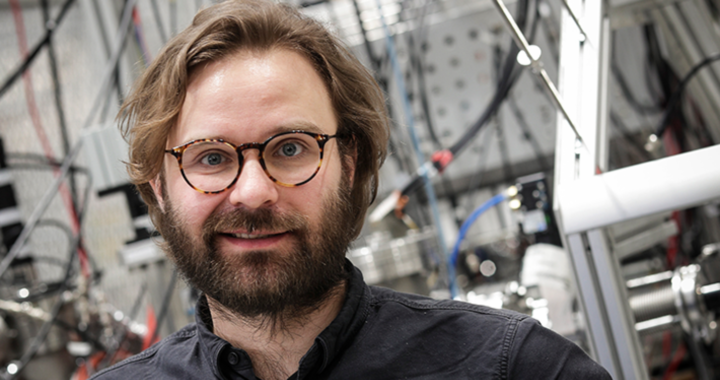
(photo: “Staff scientist Mikael Reponen from the University of Jyväskylä has participated in the research”. Credit University of Jyväskylä)
“Researchers at the ISOLDE facility at the European Organization for Nuclear Research (CERN) have developed a measurement method based on a combination of an electrostatic trap and lasers, which may help to determine the chemical properties of the rarest and least known elements.”
University of Jyväskylä physicist Mikael Reponen is actively involved in this work as part of our ISOLDE project collaboration, underscoring HIP’s engagement in cutting-edge nuclear and atomic physics research.
Read the full University of Jyväskylä post here:
https://www.jyu.fi/en/news/ion-recycling-opens-the-way-to-research-into-the-heaviest-elements